Aura Mesh Window
Direct factory supply of certified acoustic attenuation materials engineered for industrial, commercial, and residential projects across Western Uganda.
Understanding sound transmission challenges created by Mbarara’s rapid transition into a primary regional commercial hub.
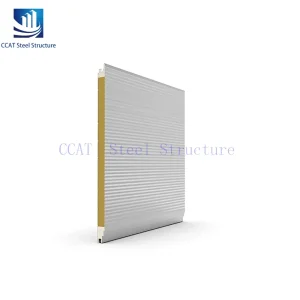
Mbarara City—as the economic anchor of Western Uganda—is experiencing an explosion in industrial development across the Kakoba and Biharwe industrial corridors. Large-scale milk processing plants, grain mills, and manufacturing plants generate significant low-frequency structural and airborne noise. Building envelope factories serving Mbarara must engineer specialized sandwich panel facades with continuous mineral wool cores (density ≥ 120kg/m³) to guarantee a Weighted Sound Reduction Index ($R_w$) exceeding 45 dB, isolating internal heavy machinery vibration from external environments.
The heavy traffic corridor linking Kampala to Rwanda and the DRC cuts straight through Mbarara, subjecting mixed-use commercial developments, hotels, and educational facilities to continuous 75–85 dBA sound exposure. Standard single-skin envelopes fail to suppress dynamic vehicular noise. Our precision factory solutions introduce gas-filled double/triple structural glass curtain walls and AAC block envelopes specifically formulated to dampen low-to-mid frequency traffic noise, achieving Sound Transmission Class (STC) ratings above 52.
Mbarara's equatorial tropical highland climate presents a unique engineering challenge: high daytime solar irradiation combined with frequent heavy convective rainstorms. Metal roof cladding without dampening layers produces high-pitch impact noise up to 88 dBA during rainfall. By pairing micro-perforated vapor-permeable membrane tissues with high-density polyiso (PIR) and vacuum insulated panels (VIPs), our building envelopes achieve dual microclimate isolation—reducing rain impact sound by over 28 dB while maintaining ultra-low thermal transmittance ($U\text{-value} \le 0.15 \text{ W/m}^2\text{K}$).
In Sub-Saharan high-humidity zones like Mbarara, acoustic degradation often occurs due to moisture ingress degrading fibrous core insulation. Factory-applied micro-porous breathable membranes combined with hydrophobic fumed silica VIP cores ensure structural acoustic longevity without humidity-induced attenuation decay.
A rigorous evaluation of Sound Transmission Class (STC), Flanking Transmission, and Mass-Air-Mass resonance control.
Sound insulation performance in modern building envelopes is governed by Mass Law, structural damping, and cavity resonance optimization. Single-layer homogeneous walls follow the Mass Law, where sound transmission loss increases by approximately 6 dB per doubling of mass per unit area. However, relying purely on structural mass is economically and structurally unfeasible for contemporary tall buildings and large-span factories in Mbarara.
Our manufacturing technology leverages multi-layer damped skin systems (Mass-Spring-Mass architecture). By combining high-density outer sheets (such as reinforced aluminum curtain wall skins or AAC masonry) with resilient mineral wool or fumed silica vacuum cores, we break structural vibration continuity. This eliminates coincidence dip frequencies—where sound waves pass unimpeded through rigid panels—expanding the acoustic attenuation spectrum from 63 Hz up to 5000 Hz.
| Building Envelope System Type | Average STC Rating | Weighted Sound Reduction ($R_w$) | Thermal U-Value ($\text{W/m}^2\text{K}$) | Ideal Mbarara Application |
|---|---|---|---|---|
| Standard Single Sheet Corrugated Steel | 18 - 22 dB | 20 dB | 5.80 | Basic agricultural storage facilities |
| Double Glazed Aluminum Curtain Wall (6+12A+6) | 35 - 38 dB | 36 dB | 2.70 | Standard commercial retail frontage |
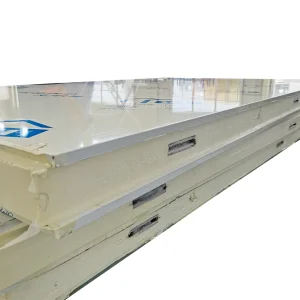
| High-Density Rockwool Sandwich Wall Panel (100mm) | 42 - 46 dB | 44 dB | 0.38 | Mbarara Industrial Park production facilities |
| Vacuum Glass Ultra-Thin Envelope System | 48 - 52 dB | 50 dB | 0.44 | Luxury hospitality, hospitals, executive offices |
| AAC Concrete Block + VIP Core Composite Wall | 54 - 58 dB | 56 dB | 0.18 | Precision labs, broadcast studios, high-noise zones |
How advanced material science and AI-driven production line robotics are transforming acoustic insulation worldwide and in East Africa.
Traditional double glazing relies on inert gas fills (Argon/Krypton) which degrade over time. Next-generation building envelopes incorporate ultra-thin vacuum glass (0.1mm micro-vacuum gaps). By removing gas molecules entirely, sound wave conduction through air pressure differentials is virtually eliminated. This enables ultra-slim 10mm glass assemblies to achieve STC > 50 dB while reducing envelope dead load by 60%.
Sub-wavelength acoustic metamaterials are revolutionizing factory envelope designs. Engineered sub-millimeter geometry surfaces trap narrow-band low-frequency noise (e.g., diesel generators, heavy compressors) through destructive wave interference without requiring massive structural thickness. This tech is expanding rapidly in urban Sub-Saharan commercial spaces.
High-capacity automated 100,000m³ AAC block plants create micro-cellular concrete structures containing millions of non-connecting air pockets. AAC blocks combine non-combustible structural fire safety with exceptional structural acoustic damping, providing ideal baseline structural envelopes for hospital wards and educational institutions in Mbarara.
Serving over 100 countries with annual export values exceeding US$8 million in customized acoustic glass, doors, windows, and modular building envelopes.
Establishment and Foundation (circa 2015): The company was founded in Anyi County, Nanchang City, Jiangxi Province. It is a manufacturing factory integrating research and development, and professional deep processing of glass, doors, windows, and aluminum fences.
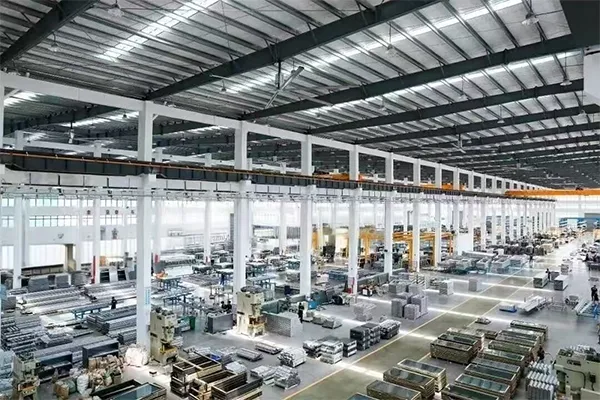
We have been in this industry for over 10 years. The factory covers an area of 30,000 square meters and has 6 production workshops, 6 glass production lines, 8 door and window production lines, and 4 fence production lines. Currently, the factory has 150 employees, 45 of whom are engineers. These engineers are responsible for providing customers with design solutions, construction plans, optimized technical drawings, new product development, and installation tutorials. A dedicated engineer will be assigned to handle the relevant solutions for each order. We have a professional transportation team to prevent damage to glass, doors, windows, and other fragile items during transportation. Our main export regions include Africa, Asia, Australia, and the Americas. We export to more than 100 countries, with an annual export value exceeding US$8 million.
In its early stages, the company mainly engaged in the trade, custom processing, and sales of various industrial and architectural aluminum profiles and door and window accessories. With business development, it gradually accumulated customer resources and market understanding.
The company began to extend downstream in the industrial chain, expanding its business from single profile trading and processing to the research, design, and production of all-aluminum home furnishings. This was an important strategic expansion for the company, seizing the market opportunity for environmentally friendly and durable all-aluminum home furnishings.
Currently, the company has developed into a comprehensive industrial and trading enterprise integrating industrial aluminum profiles, all-aluminum home furnishings, system doors and windows, and high-end door and window accessories. It expands its national market through a combination of online and offline channels.
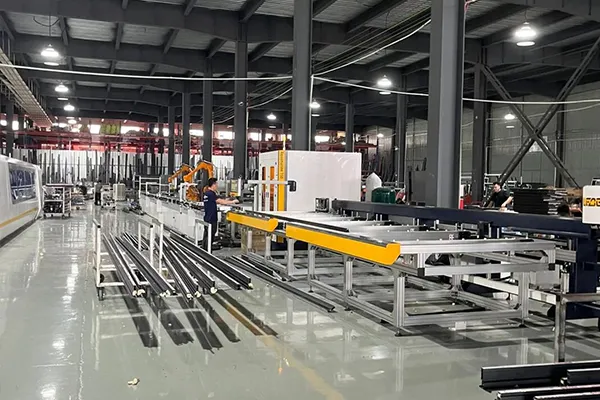
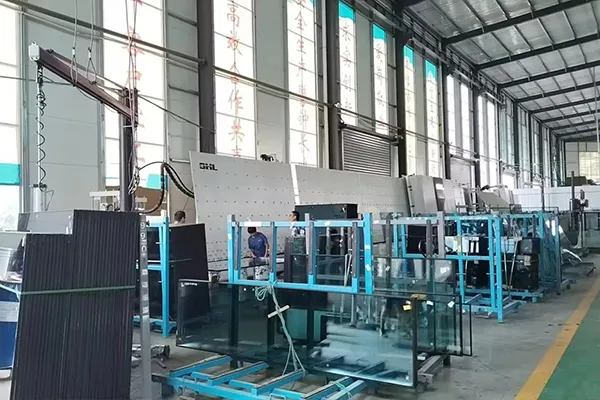
Custom structural engineering packages designed to handle tropical humidity, acoustic compliance, and logistics safety.
Every building in Mbarara faces distinct acoustic dynamics depending on elevation, wind loading, and distance from major bypass roads. Our 45-engineer team delivers end-to-end design solutions, structural calculations, thermal modeling, and acoustic finite element simulations. We provide CAD drawings, wind load calculations (compliant with East African structural standards), and detailed installation tutorials to ensure seamless site execution.
Long-distance intermodal shipping from our plant to Mombasa Port and onward via the Northern Corridor to Mbarara requires ultra-durable packaging. We utilize customized steel-framed crates, anti-vibration rubber spacing blocks, and vacuum-sealed moisture barrier films to prevent glass micro-fractures, aluminum corrosion, or acoustic insulation compression during transport.
Expert guidance addressing structural acoustic engineering, product selection, and local code compliance.
Sound Transmission Class (STC) is the North American standard (ASTM E90/E413) measuring airborne sound attenuation in the frequency range of 125 Hz to 4000 Hz, focused heavily on speech frequencies. Weighted Sound Reduction Index ($R_w$) is the ISO standard (ISO 717-1) spanning 100 Hz to 3150 Hz. Both provide comparable metrics, but $R_w$ includes low-frequency correction factors ($C$ and $C_{tr}$) essential for measuring industrial machine hums and traffic noise prevalent in Mbarara.
High humidity can cause traditional glass wool or open-cell foam insulation to absorb ambient moisture over time. Water accumulation increases material thermal conductivity (destroying U-values) and creates structural sagging, forming internal acoustic voids that allow sound leakage. Our building envelopes feature hydrophobic micro-porous silica coatings, closed-cell polyiso (PIR), and breathable waterproof membranes that resist moisture absorption while maintaining steady STC performance.
Yes. Ultra-thin vacuum glass achieves an STC rating equal to or superior to a 30mm thick double-glazed unit with laminated glass, but at a thickness of only 8.3mm to 10.3mm. This drastically reduces the structural aluminum frame profile weight requirements, cutting building structural dead load while significantly reducing solar heat gain ($SHGC \le 0.35$) in Mbarara’s sunny environment.
Flanking transmission occurs when sound bypasses the primary building envelope element through indirect paths such as perimeter structural joints, continuous mullions, or unsealed wall-to-floor junctions. We supply specialized elastomeric acoustic sealants, structural thermal isolation gaskets, and continuous perimeter flashing systems to eliminate flanking noise during construction.
Explore our certified thermal-acoustic glass, insulated sandwich panels, VIP boards, and concrete block equipment available for direct shipment to Mbarara.
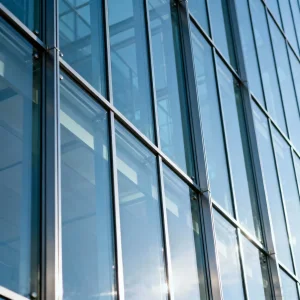
Ultra-Thin Vacuum Glass with Superior Thermal & Acoustic Insulation for Windows/Curtain Walls
View Product Specifications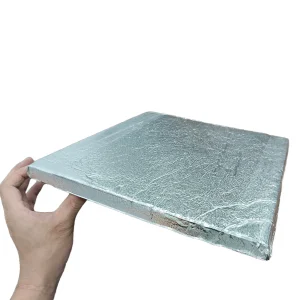
Thermal Insulation Building Material Insulation Fiberglass Fumed Silica VIP Board
View Product Specifications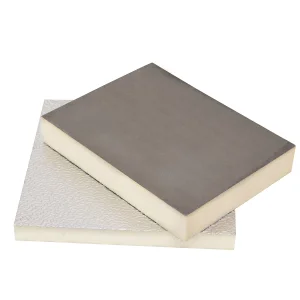
25mm Fire-Resistance Polyiso Foam Insulation Board for Building Outside Wall
View Product Specifications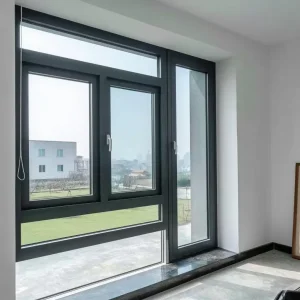
High-Performance Thermal Insulation Glass - Vacuum Glass with U-Value ≤0.44
View Product Specifications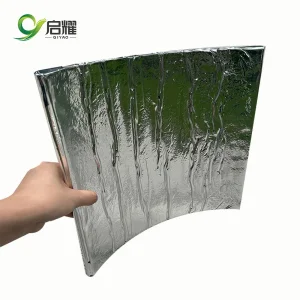
Wall Panel High-Efficiency Fiberglass Fumed Silica Vacuum Thermal Insulation Panel
View Product Specifications