Aura Mesh Window
How to make railings child and pet friendly is not only a design question. It is a daily safety decision. A railing may look attractive, yet still create dangerous gaps, climbable surfaces, or weak gate points. Children test boundaries with small hands. Cats squeeze through narrow openings. Large dogs can push surprisingly hard against loose barriers.
Home-safety specialist Julie Vallese says, “Safe design begins by anticipating how children and pets will actually use a space.” This practical idea shapes the guidance in this article. We will examine spacing, railing height, gate locks, surface finishes, and attachment strength. We will also consider balconies, staircases, decks, and indoor landings. Each location needs a slightly different response.
Begin with the gaps. A child’s head should never fit through an opening. Avoid horizontal rails that invite climbing, especially beside stairs or raised decks. Choose smooth materials without sharp edges, pinch points, or splintering finishes. A self-closing gate can help, but it is not automatically reliable. Test it with one hand, at night, and while carrying groceries. Real life is untidy.
Pets create different challenges. A small dog may slip under a gate, while a larger dog may lean against it repeatedly. Transparent panels can improve supervision, but they may crack or become cloudy outdoors. Regular inspections matter more than perfect installation. Check loose screws, rust, widening gaps, and damaged locks every month.
No single railing works everywhere. That is the uncomfortable part. Local building requirements, pet size, child age, and balcony height can change the safest choice. When uncertain, ask a qualified contractor or building professional to review the installation before use.
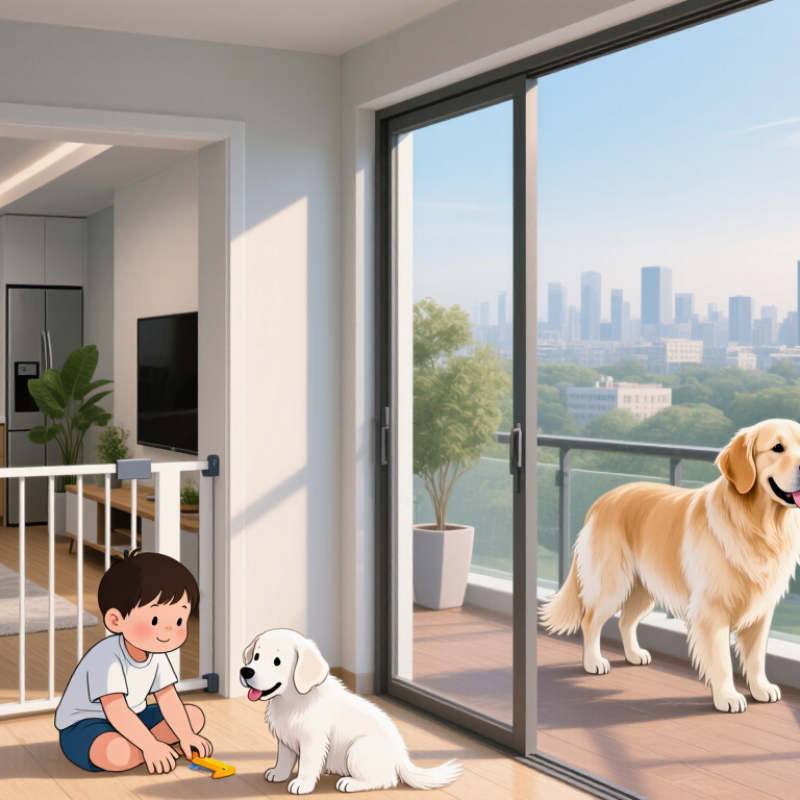
A safe railing starts with a careful risk assessment, not its appearance. Check every opening with a firm hand and a simple measuring tool. Wide gaps may allow a child’s head or a small pet to pass through. Look for climbable rails, nearby furniture, sharp corners, and low footholds. A railing can look secure and still hide a weak point.
Test posts, fasteners, and joints for movement. Watch for loose screws, cracked wood, rust, or peeling finishes. Run your fingers along edges and connections. Small splinters can cut paws and hands. On stairs, inspect the top and bottom areas closely. A gate should close reliably and resist pushing from both sides. For balcony railings, check whether chairs, boxes, or plant pots create an easy climbing route. No checklist catches everything.
Tips: View the railing from a child’s height and a pet’s height. Use a soft toy to test possible gaps, but never leave it unattended. Photograph defects before repairs. Recheck the railing after heavy rain, seasonal movement, or nearby construction. If you are uncertain about structural strength, ask a qualified local inspector. I sometimes find that the most obvious problem is not the most dangerous one. Hidden looseness deserves equal attention. Safety improves when the inspection is repeated, not treated as a one-time task.
How to Make Railings Child and Pet Friendly in 2026?
Choose Safe Materials, Heights, and Spacing
Safe railings begin with materials that resist impact, moisture, and daily wear. Choose smooth metal, sealed hardwood, or properly installed safety glass. Metal should resist corrosion, especially near outdoor steps or humid areas. Wood needs a durable, non-toxic finish without splinters. Glass panels require protected edges and secure fittings. Every surface should feel smooth.
Height needs careful measurement. For many homes, guardrails stand about 36 inches high, while handrails often measure between 34 and 38 inches. However, local building requirements can differ. Check current rules with your local building department before installation. Measure from the walking surface, not from a nearby trim board. A lower rail may look attractive, but it can fail a safety inspection.
Spacing often creates hidden risks. Use vertical balusters with narrow openings that prevent a child’s head from passing through. Many safety standards use a four-inch test sphere, but local requirements may vary. Keep openings near floors, walls, and stair treads equally tight. Avoid horizontal rails because children may climb them. Test every section by applying firm pressure by hand. Children pull, push, and shake railings unexpectedly. Pets can squeeze through surprisingly small gaps. Recheck spacing after seasonal movement, repairs, or furniture changes. That detail is easy to miss.
| Safety Dimension | Recommended or Required Value | Child and Pet Safety Purpose | Suitable Materials or Design | Reference Type |
|---|---|---|---|---|
| Residential guard height | At least 36 in (914 mm) | Helps prevent falls from raised floors, balconies, decks, and landings. | Steel, aluminum, tempered glass, hardwood, or composite systems installed with code-compliant structural connections. | Common residential code requirement |
| Commercial or public guard height | At least 42 in (1067 mm) | Provides additional fall protection in many non-residential and public-use areas. | Rigid metal, concrete, laminated or tempered safety glass, and other approved guard systems. | Common commercial code requirement |
| Stair handrail height | 34–38 in (864–965 mm) | Allows children and adults to maintain a stable grasp while using stairs. | Continuous round or rounded-profile handrails made from smooth wood, metal, or approved polymer. | ADA 2010 range for accessible routes |
| Baluster and infill opening | Less than 4 in (102 mm) | Reduces the likelihood of a young child passing through the guard opening. | Closely spaced vertical balusters, perforated panels, expanded metal, or properly secured safety glass. | Common residential guard limit |
| Stair-side opening | Less than 4⅜ in (111 mm) | Addresses the larger opening sometimes created by sloped stair geometry. | Vertical pickets or infill panels positioned to maintain a consistent safe opening along the stair. | Common stair guard limit |
| Triangular stair opening | Must not allow a 6 in (152 mm) sphere to pass | Helps prevent entrapment in the area formed by a tread, riser, and lower rail. | Use a lower infill member, closely spaced vertical bars, or a solid stair-side panel. | Common stair safety provision |
| Small-pet opening target | Preferably 2–3 in (51–76 mm), based on pet size | Helps prevent small dogs, cats, and other pets from squeezing through or becoming trapped. | Pet-safe mesh, narrow vertical balusters, or solid lower panels; measure the pet before selecting spacing. | Pet-safety guidance, not universal code |
| Lower infill protection | Use a solid or closely spaced lower section where needed | Prevents children from climbing through lower gaps and reduces pet escape routes. | Impact-resistant panels, vertical pickets, wire mesh with protected edges, or laminated safety glass. | Risk-based design recommendation |
| Handrail gripping diameter | 1¼–2 in (32–51 mm) circular diameter | Provides a graspable profile for smaller hands and improves support during a fall or slip. | Round hardwood or metal rails; avoid sharp rectangular profiles and oversized sections. | ADA 2010 handrail guidance |
| Handrail wall clearance | At least 1½ in (38 mm) | Leaves enough room for fingers to wrap around the rail without being pinched. | Use correctly sized brackets and return the handrail smoothly to a wall, post, or floor. | ADA 2010 requirement |
| Handrail ends | Return ends or terminate safely | Reduces snagging hazards for clothing, leashes, toys, and small hands. | Use returned ends, rounded transitions, or continuous rails; avoid exposed sharp projections. | Accessibility and injury-prevention practice |
| Surface edges and corners | Smooth, rounded, and free of sharp burrs | Reduces cuts, scrapes, puncture injuries, and snagging hazards. | Radius exposed metal edges, sand hardwood smooth, cap mesh ends, and use rounded trim profiles. | General safety requirement |
| Glass infill | Use safety glazing; do not use ordinary annealed glass | Safety glazing is designed to reduce dangerous shards if the panel breaks. | Tempered or laminated safety glass installed in a tested framing or mounting system. | Safety-glazing principle |
| Mesh infill | Use rigid, securely fastened mesh with protected edges | Prevents pets from pushing through and reduces finger, paw, and clothing entrapment risks. | Welded wire or architectural mesh; avoid loose, flexible netting that can deform under load. | Pet- and child-safety recommendation |
| Climbability | Avoid horizontal rails, footholds, and decorative ledges | Discourages children from climbing over the guard and helps pets avoid jumping onto the rail. | Prefer vertical balusters or smooth infill; minimize projecting ornaments and wide lower rails. | Fall-prevention design recommendation |
| Structural load resistance | Design and fasteners must meet the locally adopted building code | A guard that loosens or fails under body weight creates a serious fall hazard. | Use engineered posts, blocking, corrosion-resistant fasteners, and connections suitable for the substrate. | Verify with local building authority |
| Outdoor corrosion resistance | Protect all exposed components against the site environment | Corrosion can weaken connections and create sharp, flaking, or stained surfaces. | Use galvanized or suitably coated steel, corrosion-resistant aluminum, stainless steel, or sealed exterior wood. | Climate- and maintenance-dependent |
| Fastener and component inspection | Inspect at least seasonally and after severe weather | Identifies loose screws, cracked infill, corrosion, movement, and damaged finishes before failure occurs. | Check posts, brackets, rails, balusters, glass edges, mesh tension, and gate latches. | Preventive maintenance recommendation |
| Child and pet gates | Use a gate with a self-closing and self-latching mechanism where appropriate | Helps prevent unsupervised access to stairs, balconies, pools, and other hazardous areas. | Install a rigid, properly anchored gate; keep the release mechanism out of a young child's reach. | Additional protection recommendation |
| Local approval | Confirm requirements before installation or renovation | Guard height, openings, loads, materials, and permits can vary by jurisdiction and building type. | Compare the design with the locally adopted residential, commercial, accessibility, and safety-glazing provisions. | Required verification step |
A safe railing needs more than strong posts. It needs a secure barrier that blocks climbing, squeezing, and accidental opening.
The CDC’s 2022 injury data identifies falls as the leading cause of nonfatal injuries among children. That makes open stair edges and wide railing gaps serious household risks.
Use closely spaced vertical members or rigid mesh, while following local building codes. Avoid horizontal rails that create ladder-like footholds.
Add a self-closing gate at stair entrances, with a latch positioned beyond a young child’s reach.
For pets, check the smallest gap carefully. A curious cat or small dog may pass through it.
The American Pet Products Association’s 2023–2024 survey estimated that 66% of U.S. households owned a pet, so animal escape prevention deserves equal attention.
Test the barrier with one hand. Push near the latch, pull at the corners, and inspect the floor gap. Hardware should stay tight after repeated use.
Remember the balcony chair. A child may use nearby furniture to climb above the intended barrier height. We often focus on the railing and miss the surroundings. That is a design weakness.
Inspect gates monthly, especially after moving furniture, installing flooring, or adopting a smaller pet. A stronger barrier is helpful, but supervision still matters.
How to Make Railings Child and Pet Friendly in 2026?
Improve Grip, Visibility, and Fall Protection
A child- and pet-friendly railing should feel secure before it looks attractive. Choose a continuous handrail with a rounded, comfortable profile. Small hands need enough room to close around it. A cold, slippery surface can become difficult after rain, cleaning, or winter condensation. I recommend testing the rail with a dry hand, then checking it again with light gloves.
Grip matters.
Visibility matters just as much. Use clear contrast between the railing, steps, and nearby walls. This helps children, older adults, and pets judge edges more easily. Add even lighting near landings, corners, and the bottom step. Avoid bright glare, which can hide a drop. Inspect the area from a child’s eye level. It reveals problems adults often miss.
Fall protection depends on the whole system, not only the handrail. Check that posts feel solid and connections show no movement. Keep openings small enough to reduce climbing and slipping risks, following local building requirements. Avoid horizontal features that invite children to climb. For pets, inspect lower gaps and gate latches carefully. A determined dog can find a weak point quickly. No railing stays perfect. Seasonal movement, loose fasteners, and damaged finishes need regular attention. If the structure shifts, ask a qualified inspector to assess it before making repairs.
A child- and pet-friendly railing begins with regular inspection, not decoration. The National Safety Council’s Injury Facts 2024 reported more than eight million medically consulted fall injuries in the United States during 2022. Railings cannot prevent every accident, but neglected defects increase avoidable risk.
Inspect every connection monthly. Hold the handrail and test for movement. Look for loose screws, cracked welds, rust, sharp edges, and peeling finishes. Check baluster spacing with a firm measuring tool, especially near stairs and balconies. Children may squeeze through gaps, while small pets can become trapped or fall. Install safety gates with secure hardware, and keep furniture away from guardrails. Never rely on pressure alone where a child could push against the gate.
Maintenance must continue after installation. Tighten fasteners according to the manufacturer’s instructions, replace damaged parts, and remove corrosion before it spreads. Examine outdoor railings after storms, freezing temperatures, or heavy use. The U.S. Consumer Product Safety Commission recommends routine checks for home hazards, including unstable barriers and fall risks. Local building requirements may also specify railing height, spacing, and load resistance.
I have found that quick visual checks miss important problems. A railing can look solid but shift at its anchor. Test it carefully. Photograph defects and record repair dates, even for a small home project. Pets also deserve attention: watch for climbable crossbars, chewable coatings, and openings around landings. Reinspect after repairs, because one replaced section can change the strength of the entire system.
Inspect and maintain railing dimensions for ongoing safety
During inspections, verify that residential guards are at least 36 inches high, stair guards are at least 34 inches high where permitted, and handrails are 34–38 inches above the walking surface. Openings should not allow a 4-inch sphere to pass through; triangular stair openings should not allow a 6-inch sphere. These thresholds are based on commonly adopted 2024 International Residential Code provisions. Local requirements may differ, and smaller pets may require additional mesh or closer spacing.
Choose smooth metal, sealed hardwood, or properly fitted safety glass. Metal should resist corrosion outdoors. Wood needs a non-toxic finish and no splinters. Glass edges require protection.
Many guardrails are about 36 inches high. Handrails often measure 34 to 38 inches. Measure from the walking surface. Local requirements may differ, so check current rules before installation.
Keep openings narrow enough to prevent a child’s head from passing through. Many standards use a four-inch test sphere, but local rules can vary. Check gaps near floors and stair treads too.
Horizontal rails can create footholds for climbing children. Vertical balusters are usually safer. I might overlook a small ledge, so inspect from a child’s height.
Use a continuous handrail with a rounded, comfortable profile. Small hands need room to close around it. Test it with a dry hand and light gloves.
Use even lighting near landings, corners, and the bottom step. Create clear contrast between the railing, steps, and walls. Avoid glare that hides an edge.
Apply firm hand pressure to every section. Posts should feel solid, and connections should not move. Children may pull or shake unexpectedly. A loose railing needs prompt attention.
Inspect lower gaps and gate latches carefully. Pets can squeeze through surprisingly small spaces. Recheck after furniture changes, repairs, or seasonal movement. Small gaps matter.
How to make railings child and pet friendly starts with identifying potential safety risks around stairs, balconies, decks, and raised platforms. Check for wide gaps, loose parts, sharp edges, climbable structures, and openings that could allow a child or pet to slip through or become trapped. Choose durable, non-toxic materials, suitable railing heights, and narrow spacing that improves protection without creating new hazards. Secure barriers, self-closing gates, and escape-prevention features can provide additional control in areas where supervision may be limited.
Safety also depends on comfort and visibility. Add smooth, easy-to-grip handrails, improve lighting, and use designs that make edges and changes in height easy to see. Fall protection should be strengthened with secure posts, stable fasteners, and properly fitted infill panels. Regular inspections are essential: tighten loose connections, repair damage, remove climbable objects nearby, and check that gates and barriers still close securely. Ongoing maintenance helps keep railings reliable as children grow, pets change behavior, and outdoor conditions affect materials.
