Aura Mesh  Window Aura Mesh Window

How to Choose the Best Curtain Wall Type from China?

Time:2026-09-16 Author:Oliver
0%

Choosing a curtain wall from China is not simply a pricing exercise. It is a building-performance decision. The façade must resist wind, rain, solar heat, movement, fire, and repeated installation stress. China’s manufacturing base offers stick, unitized, semi-unitized, and point-supported systems. Each type suits different project conditions.

The International Energy Agency’s 2023 Buildings report states that buildings consume about 30% of global final energy. It also links buildings to roughly 26% of energy-related emissions. These figures make glass selection and thermal detailing commercially important. The Council on Tall Buildings and Urban Habitat’s 2023 tall-building review also shows strong ongoing high-rise activity in China. That context matters. A unitized system may accelerate installation on a tall tower. A stick system may provide greater flexibility on a smaller, irregular façade. Neither option is automatically better.

John Straube, a respected building-science expert, offers a useful principle: “A wall is a system, not a product.” His warning should guide every supplier comparison. Ask about tested air leakage, water penetration, structural performance, thermal transmittance, fire strategy, coating durability, and replacement access. Request project references, laboratory reports, sample corners, and visible quality-control records. A low quotation can still become expensive. Very expensive.

This guide explains How to choose between different types of curtain walls when sourcing from China. It compares performance, cost, fabrication, logistics, installation, and long-term maintenance. Some assumptions may fail on a real project. That is why independent testing and a qualified façade consultant remain essential. Sources: International Energy Agency, Buildings 2023; Council on Tall Buildings and Urban Habitat, 2023 Tall Building Year in Review.
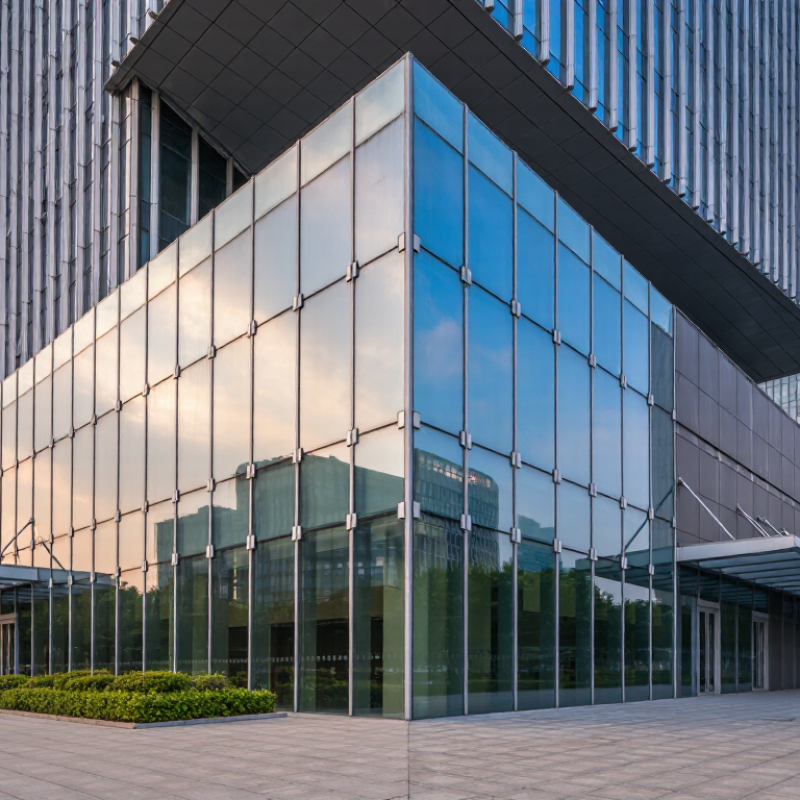
How to Choose the Best Curtain Wall Type from China?

What Is a Curtain Wall and Why Does Type Selection Matter?

A curtain wall is a non-load-bearing exterior skin attached to a building’s structural frame. It transfers its own weight and wind pressure, while the floors and columns carry the main loads. Glass, aluminum panels, insulation, gaskets, and anchors work together as one weather-resistant envelope. The system also controls daylight, heat gain, noise, and air infiltration.

Type selection matters because each system responds differently to site conditions. Stick curtain walls are assembled piece by piece on site, offering flexibility for irregular elevations. Unitized systems arrive as factory-built panels, which can improve quality and installation speed on tall projects. Semi-unitized solutions may balance factory control with site adjustment. A beautiful elevation can still perform poorly if movement joints, drainage paths, or fire barriers are overlooked.

When sourcing from China, examine engineering calculations, material traceability, factory quality records, and completed project references. Ask for a full-size performance mock-up, not only attractive samples. Check water penetration, air leakage, wind pressure, thermal performance, and structural movement. A low quotation is not automatically economical. Installation access, crate dimensions, shipping damage, and local labor skills can change the final cost. In practice, teams sometimes focus too heavily on glass appearance. That is an easy mistake. The better question is whether the chosen curtain wall suits the building’s height, climate, geometry, maintenance plan, and construction schedule. A drawing may look complete while hiding weak interfaces.

Which Curtain Wall Types Are Available from China?

China offers several curtain wall types for different building scales, climates, and installation conditions.

Stick systems arrive as profiles, glass, and panels, then assemble on site. They suit low-rise projects but need careful field control. Unitized systems are factory-assembled into large panels. They provide faster installation and more consistent quality for towers. Semi-unitized systems combine both approaches. Point-supported glazing creates a lighter, highly transparent appearance. Double-skin façades add a ventilated cavity, although their maintenance demands are higher. Budget matters. Details decide.

The UNEP Global Status Report for Buildings and Construction 2023 states that buildings consume about 30% of global final energy and produce 26% of energy-related emissions.

This makes thermal performance more than an aesthetic choice. For a cold northern project, request verified U-values, air-tightness data, and thermal-break details. In hot regions, examine solar heat-gain coefficients, shading depth, and cavity ventilation. Water testing should follow recognized methods such as ASTM E331 or EN 12155, while air testing can reference ASTM E283 or EN 12153.

A practical selection starts with a full-size mock-up, not only a catalogue drawing.

Check glass edge clearances, gasket compression, panel joints, drainage paths, and anchor tolerances. Factory inspection also matters. Review test reports, material certificates, and quality records before shipment.

Unitized walls may reduce site labor, but transport damage and replacement logistics can become expensive. Stick systems offer flexibility, yet inconsistent installation can weaken performance.

The “best” type is rarely universal. Some project decisions will need revision after testing.

How to Match a Curtain Wall Type to Building Requirements

Choosing a curtain wall from China should begin with building performance, not appearance. Match the system to height, climate, wind exposure, and installation access. A stick system suits smaller façades with many floor-by-floor adjustments. A unitized system can improve factory control on tall projects, but it requires accurate site measurements and stronger logistics planning. It is not automatically better.

Thermal performance deserves careful attention. The IEA Buildings 2023 report states that buildings consumed about 30% of global final energy in 2022. Poorly designed glazing and metal frames can increase cooling loads. Ask for tested U-values, solar heat gain data, air leakage results, and thermal-bridge details.

In hot regions, low solar gain glass may reduce cooling demand. In cold regions, insulated spandrels and warm-edge components can reduce interior condensation.

Water and wind testing should reflect the project’s exposure, not a generic catalogue value. Request laboratory reports, full-size mock-ups, and installation records. Fire stopping at slab edges also needs clear detailing and independent verification. For projects near airports or busy roads, acoustic performance matters too. The World Green Building Council has repeatedly linked building quality with occupant health, yet acoustic goals are often treated as optional. That is a mistake.

I would not trust a supplier because its drawings look polished. Review material traceability, production tolerances, sealant compatibility, and replacement procedures. A perfect specification rarely exists. Recheck assumptions with the architect, façade consultant, and local testing laboratory before production.

How to Evaluate Chinese Suppliers, Standards, and Product Quality

How to Choose the Best Curtain Wall Type from China?

Supplier evaluation should begin with evidence, not attractive renderings. UNEP’s 2024 Global Status Report states that buildings and construction consumed 32% of global energy and produced 34% of global carbon emissions in 2023. Curtain wall design therefore affects both operating costs and environmental performance. Ask Chinese suppliers to show thermal calculations, solar-control data, material declarations, and tested air, water, and structural performance.

Check compliance against the project’s required standards, such as GB/T 21086, EN 13830, or ASTM E283, E330, and E331. Requirements must match the installation location. A coastal tower needs different corrosion protection from an inland office building. Request reports from laboratories holding recognized CNAS or CMA qualifications, and verify test dates, specimen dimensions, pressure levels, and failure observations. A certificate alone is not enough.

Traceability reveals practical competence. Review aluminium alloy grades, coating thickness records, glass certificates, sealant batch numbers, and factory inspection procedures. Visit the production line if possible. Look for clean assembly areas, controlled storage, calibrated equipment, and documented corrective actions. Ask for three comparable projects, including climate, height, curtain wall type, and maintenance history. Some suppliers may provide excellent samples but weak site control. That gap deserves attention. I would also allow time for an independent mock-up test; skipping it can make a small interface error become a costly leak.

How to Choose the Best Curtain Wall Type from China? - How to Evaluate Chinese Suppliers, Standards, and Product Quality

Curtain Wall Type Typical Applications Key Performance Characteristics Main Advantages Main Limitations Recommended Supplier Evidence
Stick-Built Curtain Wall Low- to mid-rise buildings, irregular façades, projects with restricted transport or lifting access. Profiles, glass, and panels are assembled on site; performance depends strongly on installation accuracy, drainage, seals, and field workmanship. Flexible dimensions, easier site adjustment, and generally lower factory logistics requirements. More site labor, longer installation time, and greater exposure to weather and workmanship variation. System drawings, installation method statement, air/water/structural test reports, site quality plan, and evidence of trained installers.
Unitized Curtain Wall Medium- and high-rise buildings with repetitive floor-to-floor façades and demanding construction schedules. Factory-assembled panels are installed floor by floor; interlocking joints and factory glazing can improve consistency and weather control. Fast installation, reduced site glazing, improved quality control, and better suitability for tall buildings. Higher design and tooling requirements, stricter dimensional coordination, and increased transport and storage planning. Full-scale mock-up test, production inspection records, panel dimensional checks, joint and gasket details, lifting plan, and traceability records.
Semi-Unitized Curtain Wall Projects requiring a balance between factory assembly and site flexibility. Some components are pre-assembled in the factory while selected connections or glazing operations are completed on site. Can reduce site labor while accommodating moderate façade variations and logistical constraints. Interface responsibilities must be clearly defined; inconsistent site installation can reduce the expected performance. Interface matrix, assembly sequence, responsibility schedule, sample panel inspection, and test reports covering both factory and site-installed interfaces.
Point-Supported Glass Façade Entrances, atriums, lobbies, retail façades, and visually open architectural spaces. Glass is supported by fittings, cables, fins, or trusses; engineering must address concentrated loads, glass holes, deflection, and movement. High transparency, minimal framing, and strong architectural visual effect. More demanding structural design, specialist fabrication, higher installation precision, and potentially more complex maintenance. Structural calculations, glass and fitting certificates, finite-element analysis where appropriate, connection testing, and installation tolerances.
Metal Panel or Opaque Spandrel Curtain Wall Industrial, commercial, institutional, and mixed-use buildings requiring opaque or varied façade zones. Uses aluminum, steel, composite, or insulated panels with backup framing and cavity drainage; fire and moisture detailing are critical. Broad finish options, reduced glazing area, good visual variation, and potential energy benefits in opaque zones. Panel flatness, thermal bridging, coating durability, and fire performance require careful specification and inspection. Material certificates, coating test results, panel construction details, fire classification documentation, water-management drawings, and sample approval.
Double-Skin Curtain Wall Buildings targeting enhanced solar control, acoustic performance, or a ventilated façade cavity. Two façade layers create an intermediate cavity; airflow, shading, condensation, fire stopping, and cleaning access require integrated design. Can improve solar-control strategies and occupant comfort when correctly designed and operated. Higher cost and complexity; incorrect cavity ventilation or fire compartmentation can create serious performance risks. Cavity airflow analysis, condensation assessment, fire and smoke strategy, maintenance plan, solar-control calculations, and physical mock-up testing.

Chinese Supplier Evaluation Checklist

Evaluation Dimension What to Verify Preferred Evidence Suggested Weight
Applicable Standards Confirm the proposed system is designed for the project’s local wind, seismic, thermal, fire, acoustic, and water requirements. Compliance matrix referencing GB/T 21086, EN 13830, ASTM E283, ASTM E330/E330M, ASTM E331, or the standards specified by the project. 15%
Air and Water Tightness Review pressure levels, test sequence, drainage paths, gaskets, sealants, and pressure-equalization details. Independent laboratory reports and a project-specific performance test plan; generic brochures alone are insufficient. 15%
Structural Safety Check wind-load calculations, mullion and transom deflection, glass strength, anchors, fasteners, thermal movement, and seismic movement. Signed calculations, material specifications, connection details, and test results at the required design pressures. 20%
Thermal and Condensation Control Evaluate thermal breaks, glass configuration, frame U-value, solar heat gain, interior surface temperature, and condensation risk. Thermal simulation, condensation analysis, glass data, and documented material conductivity values. 15%
Fire and Material Compliance Verify fire stopping at floor lines, insulation classification, spandrel construction, sealants, gaskets, and glass type. Current fire test or classification documents, approved product data, and details matching the proposed assembly. 15%
Manufacturing and Quality Control Assess incoming material inspection, CNC or cutting accuracy, surface protection, glazing procedures, batch control, and final inspection. Quality manual, inspection and test plans, calibration records, nonconformance procedure, and production audit access. 10%
Project Delivery and After-Sales Support Review shop-drawing capability, packaging, export documentation, spare parts, site supervision, warranty terms, and response times. Approved schedule, responsibility matrix, packaging specification, installation support plan, and measurable warranty conditions. 10%

Reference standards should always be confirmed against the latest edition and the requirements of the project jurisdiction, contract documents, and approving authority.

How to Compare Costs, Lead Times, and After-Sales Support

Choosing a curtain wall from China should begin with a comparable specification, not a low quotation. Ask each supplier to price the same elevations, glass build-up, finishes, hardware, testing, packing, and delivery terms. A cheap square-meter rate can hide engineering, inland transport, or installation exclusions. Check every exclusion. I once focused too heavily on aluminum prices and missed reinforcement and crate fees. That mistake changed my review method.

For lead times, separate design approval, shop drawings, mock-ups, fabrication, and shipping. A quoted “30 days” may start only after the deposit and approved drawings. Confirm production capacity during your required month, then add time for revisions and port delays. Use written milestones with named responsibilities. A realistic schedule is more useful than a confident promise. Still, forecasts are imperfect.

After-sales support deserves the same scrutiny as cost. Ask how defects are recorded, who responds, and how replacement panels or fittings are shipped. Clarify warranty coverage, response times, remote troubleshooting, and possible site assistance before signing. Reliable suppliers can provide project references, inspection records, installation manuals, and spare-parts recommendations. I would also test communication with a technical question before ordering. Slow replies during quotation rarely improve after delivery. Keep every promise documented.

FAQS

What is a curtain wall?

A curtain wall is a non-load-bearing exterior skin attached to a building’s structural frame. Glass, aluminum, insulation, gaskets, and anchors form the envelope.

Why does curtain wall type selection matter?

Different systems respond differently to height, climate, geometry, wind, and installation access. A beautiful façade can still leak or perform poorly.

When is a stick curtain wall suitable?

Stick systems are assembled piece by piece on site. They suit smaller façades with irregular elevations and frequent floor-by-floor adjustments.

When might a unitized curtain wall be better?

Unitized panels arrive factory-built, which can improve quality and installation speed on tall buildings. Accurate measurements and careful transport remain essential.

What thermal information should buyers request?

Request tested U-values, solar heat gain data, air leakage results, and thermal-bridge details. In hot regions, low solar gain glass may reduce cooling demand.

How should water and wind performance be checked?

Ask for full-size mock-ups and project-specific testing. Check water penetration, air leakage, wind pressure, drainage paths, and structural movement.

What supplier evidence should be reviewed?

Examine material traceability, production tolerances, sealant compatibility, factory records, and comparable project references. Sample quality alone proves little.

What practical costs can change the final budget?

Installation access, crate dimensions, shipping damage, and local labor skills can increase costs. A low quotation is not automatically economical.

Why are fire barriers and interfaces important?

Fire stopping at slab edges needs clear details and independent verification. Weak interfaces can hide behind polished drawings, then become expensive problems.

Should appearance guide the final decision?

Appearance matters, but performance should lead. Recheck the design with project consultants and a local testing laboratory before production. I may still miss something.

Conclusion

Choosing the right curtain wall type is essential because it affects a building’s appearance, energy efficiency, structural performance, installation process, and long-term maintenance. This article explains the main options available from China, including stick, unitized, semi-unitized, and specialized systems, while showing how each type suits different building heights, shapes, climates, schedules, and performance requirements. Understanding these differences is the first step in learning how to choose between different types of curtain walls.

The guide also outlines how to assess suppliers through technical documentation, relevant standards, testing reports, quality-control procedures, production capacity, and project experience. It compares the total cost of each solution, including materials, transportation, installation, maintenance, and potential replacement expenses. In addition, readers will learn how to review lead times, communication efficiency, warranty terms, spare-part availability, and after-sales support. With a structured evaluation process, buyers can select a reliable curtain wall solution that balances design goals, safety, durability, budget, and project schedule.

Oliver

Oliver

Oliver is a seasoned marketing professional with a wealth of expertise in driving brand awareness and engagement. With a deep understanding of our company's product offerings, he consistently delivers high-quality content that enriches our professional blog. His insights not only shed light on......